
Feeding Ducks Properly: What do ducks eat?
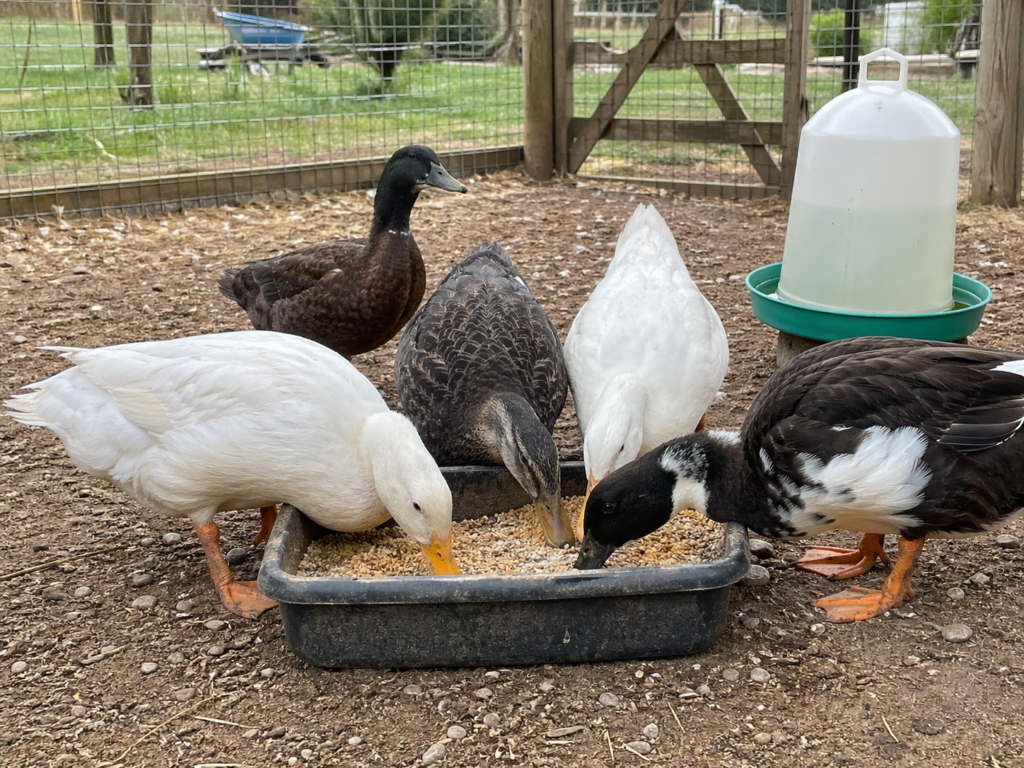
Feeding ducks properly is one of the foundations of good duck care. Ducks need a balanced diet, access to clean water while eating, and feeding routines that match their age, purpose, and season. This guide explains what ducks eat, how to feed them safely, and which common mistakes to avoid.
If you want strong, active, productive birds, feeding ducks properly should be a top priority from the very beginning. Good nutrition affects almost everything in a duck flock, from growth and feather quality to egg production, general condition, and long-term health. Ducks are enthusiastic eaters and often seem happy to consume almost anything, but that does not mean every feeding habit is good for them.
A proper duck feeding guide starts with one simple principle: ducks need a consistent, appropriate, balanced diet rather than random leftovers or occasional handfuls of whatever happens to be available. Their needs also change depending on age, breed type, season, and whether they are being kept mainly for eggs, companionship, or smallholding use.
Why proper feeding matters
Many duck care problems begin with poor feeding habits. Birds that are underfed, overfed, or fed an unbalanced diet may show poor growth, weak feather condition, messy droppings, lower egg production, and reduced overall condition. In young birds, feeding mistakes can have an especially strong impact because ducklings grow quickly and depend on steady nutrition during early development.
A good diet supports healthy body condition, normal activity, strong legs, good feathering, and reliable laying in adult females. It also helps ducks cope better with seasonal challenges such as colder weather, moult, and the demands of breeding or egg production.
What do ducks eat?
When people search for what do ducks eat, they often expect a very simple answer. In reality, ducks eat a varied diet and do best when their main feed is nutritionally balanced and appropriate for their life stage.
Domestic ducks usually thrive on a suitable complete feed designed for waterfowl or, where appropriate and carefully chosen, a poultry feed that matches their needs. In addition to their main ration, ducks may also enjoy foraging for grasses, weeds, insects, and other natural food items when conditions allow. Some fresh foods can also be offered in moderation as part of a varied routine.
The key point is that treats, greens, and foraging opportunities should support the main diet, not replace it. Ducks should not be expected to stay healthy on scraps alone.
The importance of a balanced main feed
The backbone of feeding backyard ducks is a reliable main feed that provides consistent nutrition. Ducks need a proper balance of energy, protein, vitamins, and minerals. Random feeding often creates imbalance even when the birds look happy and eager at feeding time.
The exact feed type depends on whether you are raising ducklings, growing young birds, maintaining adult ducks, or supporting laying females. A starter feed for ducklings will not always be right forever, and a laying diet may not suit all birds equally at all times. Feeding must match the stage of life and the purpose of the flock.
This is one reason why serious duck keepers usually build feeding routines around a dependable base ration first and then add extras carefully, rather than doing it the other way round.
Feeding ducklings, growers, and adult ducks
Duck feeding changes over time. Young ducklings need carefully managed nutrition to support rapid development. As they grow, their requirements shift, and once they reach adulthood, their feeding plan becomes more focused on maintenance, activity, and in many flocks, egg production.
Adult laying ducks often need more nutritional support than non-laying birds because producing eggs places extra demands on the body. Birds that are not laying may need a simpler maintenance routine. Heavier breeds, active foragers, and ducks living through colder weather may also differ slightly in how much feed they consume.
A good keeper watches the flock closely. Appetite, body condition, feather quality, droppings, egg production, and behaviour all give useful clues about whether the feeding routine is working well.
Do ducks need access to water while eating?
Yes, absolutely. This is one of the most important points in any duck feeding guide. Ducks should always have access to clean water when they are eating. Ducks use water to help swallow feed and keep their bills, nostrils, and mouths functioning properly during meals.
Feed should never be given in a way that forces ducks to eat dry food without nearby water. That creates unnecessary risk and discomfort. Their water does not need to turn the whole feeding area into mud, but it does need to be accessible, clean enough for safe use, and easy to refresh frequently.
The connection between feed and water is so important that these two parts of duck care should always be planned together.
Best foods for ducks
When people ask about the best food for ducks, the most honest answer is that the best food is a balanced main ration suited to the ducks’ age and role, supported by safe extras in moderation.
Useful additions may include appropriate leafy greens and other fresh items offered as part of a varied routine. Ducks often enjoy foraging naturally as well, which adds enrichment and variety. However, extras should remain exactly that: extras. They should not crowd out the main feed or encourage selective eating.
It is also important not to confuse “foods ducks like” with “foods ducks should eat often.” Ducks may rush toward treats enthusiastically, but excitement is not the same as nutritional value.
Feeding schedule and routine
Ducks usually do well when feeding happens in a predictable routine. A consistent daily system makes it easier to monitor appetite, check flock condition, and avoid waste. Some keepers prefer scheduled feeding, while others may adapt the routine depending on the size of the flock, access to forage, and the season.
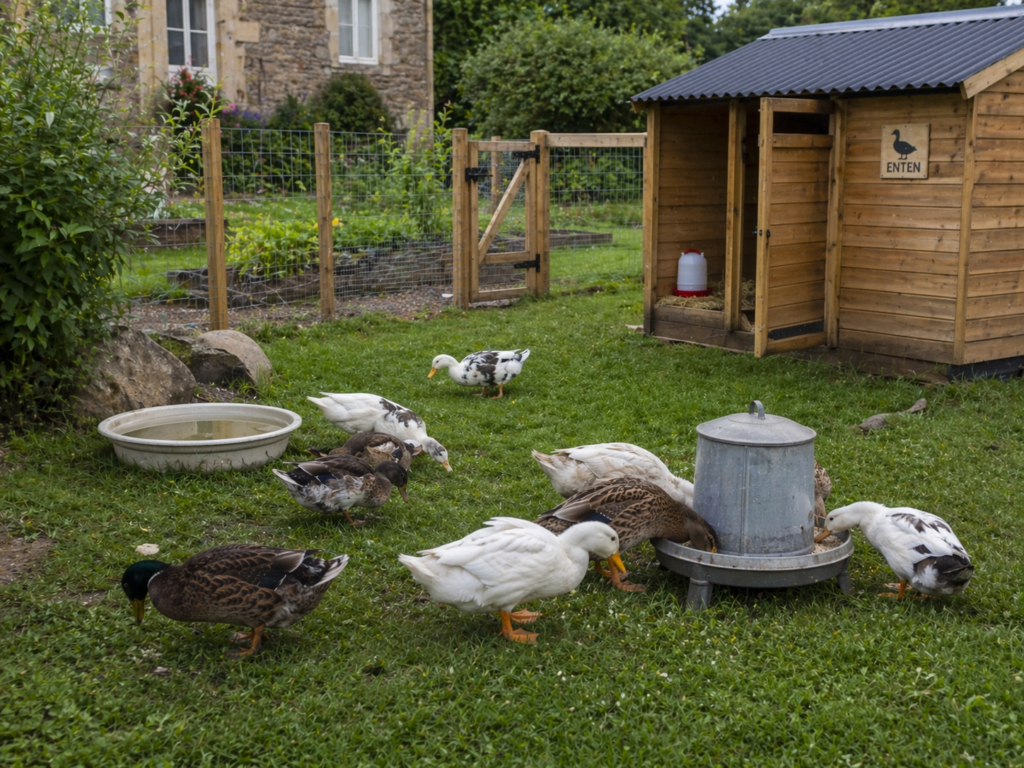
A practical feeding setup should also keep feed as clean and dry as possible. Feed that gets soaked, trampled, or mixed with droppings is quickly wasted and less hygienic. Troughs, feeders, or feeding areas should be chosen with mess management in mind because ducks are naturally enthusiastic and untidy eaters.
The simpler the feeding system is to refill and clean, the easier it becomes to keep standards high over time.
Treats and extras: useful but limited
Treats can be part of feeding ducks properly, but they should never dominate the diet. Many beginners enjoy giving ducks snacks because it feels friendly and rewarding, and ducks are usually more than willing to accept them. The risk is that too many extras can reduce interest in the balanced main ration and gradually create nutritional imbalance.
Treats work best when they are occasional, moderate, and chosen carefully. They can also be useful for encouraging trust, enrichment, and activity. The goal is not to remove all variety from a duck’s life. The goal is to make sure variety does not become the main feeding strategy.
Common duck feeding mistakes
A large part of good duck nutrition is avoiding the mistakes that cause long-term trouble. One common problem is relying too heavily on bread or similar filler foods. Ducks may eat them eagerly, but these foods are not a good foundation for a healthy diet. Another mistake is giving too many scraps without thinking about balance, freshness, or suitability.
Some keepers also under-estimate how important water is during feeding. Others use a feed that is not appropriate for the ducks’ age or current needs. Overfeeding rich extras can also lead to poor condition, wasted feed, and flock management problems.
Perhaps the biggest mistake of all is assuming that ducks are so tough and adaptable that nutrition does not really matter. It does. Feeding affects nearly every area of duck health and performance.
Seasonal changes in duck feeding
Duck feeding is not always exactly the same throughout the year. In colder months, ducks may need more support to maintain body condition, especially if they are less able to forage. During warmer months with better grazing and insect activity, some flocks naturally find more for themselves.
Laying periods, moulting, and growth phases can also influence nutritional demand. This does not mean the whole system has to become complicated, but it does mean keepers should not treat feed as a fixed issue that never needs review. Good flock care involves small seasonal adjustments based on observation and common sense.
Feeding laying ducks
If your flock includes laying females, feeding ducks properly becomes especially important because egg production places real pressure on the body. Layers need reliable nutrition to support regular laying, maintain condition, and continue producing eggs with fewer problems.
When the diet is poor, the effects may show up gradually. Egg output may fall, condition may drop, or the birds may appear less robust overall. Laying ducks benefit from a feeding approach that supports both maintenance and production rather than leaving them to cope on a general low-quality ration.
Foraging and natural feeding behaviour
Ducks are natural foragers and enjoy exploring, searching, dabbling, and picking through vegetation and the ground. This behaviour is valuable for enrichment and can contribute to the overall diet, especially in well-managed outdoor systems.
Even so, foraging is not a complete feeding plan on its own for most domestic setups. Garden ground, pasture, or small enclosures rarely provide everything a flock needs all year round. Natural behaviour should be encouraged, but it should complement proper feeding rather than replace it.
How to tell if your duck feeding routine is working
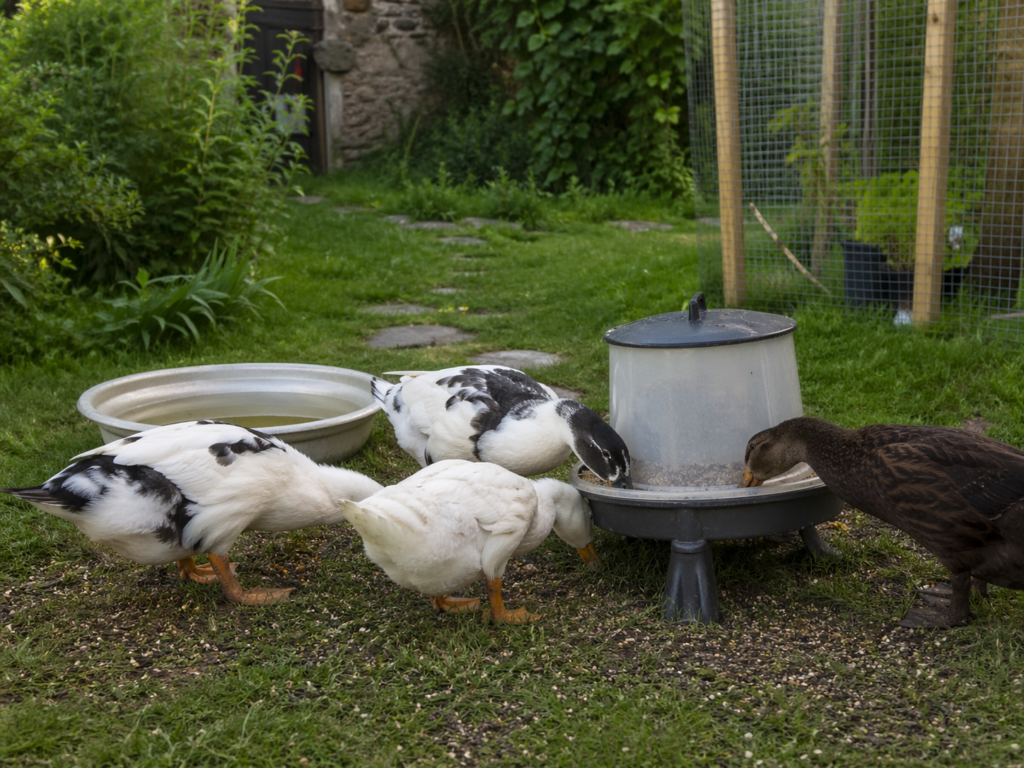
A healthy feeding system shows up in the flock’s overall condition. Ducks should look active, alert, well-feathered, and appropriately conditioned for their breed and purpose. Their appetite should be steady, and laying birds should not seem depleted. Droppings, egg cleanliness, feather quality, and general behaviour can all offer useful information.
If birds seem weak, messy, thin, overly fat, dull-feathered, or inconsistent in appetite, it may be time to review the feeding plan. Nutrition problems do not always look dramatic at first. Often they build slowly through routine habits that seem harmless day to day.
Final thoughts on feeding ducks properly
The best approach to feeding ducks properly is simple in principle even if the details vary from flock to flock. Start with a balanced feed suited to the ducks’ life stage. Make clean water available whenever they eat. Use treats moderately. Adjust for age, laying status, weather, and condition. Watch the flock closely and let practical observation guide small improvements.
A well-fed duck flock is easier to manage, healthier overall, and more enjoyable to keep. Good feeding is not about giving the most food or the fanciest extras. It is about consistency, balance, and understanding what ducks truly need.
FAQ section
What do ducks eat every day?
Ducks should eat a balanced main feed appropriate for their age and role, with safe extras and natural foraging used only to support the diet rather than replace it.
Can ducks eat bread?
Bread should not be a regular part of a duck’s diet. It may fill them up without providing the balanced nutrition they need.
Do ducks need water when eating?
Yes, ducks should always have access to clean water while eating so they can swallow feed properly and keep their bills and nostrils functioning well.
What is the best food for ducks?
The best food for ducks is a nutritionally balanced feed suited to their life stage, supported by safe fresh extras in moderation.
How often should ducks be fed?
Ducks do well with a consistent daily feeding routine. The exact schedule depends on age, flock setup, season, and access to forage.
Can ducks live on forage and scraps alone?
No, in most domestic setups ducks should not rely on forage and scraps alone. They need a proper main ration to stay healthy and productive.