
Duck Housing: How to Create a Safe, Dry, and Comfortable Home
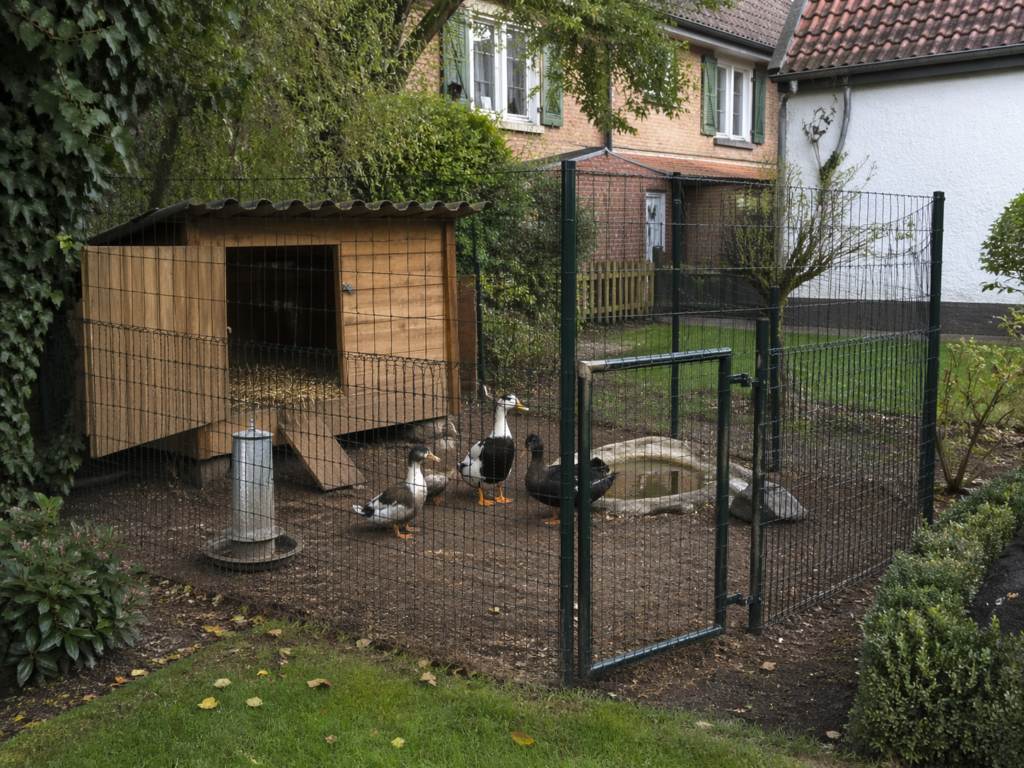
Good duck housing is one of the most important parts of keeping a healthy flock. Ducks need a safe, dry, well-ventilated shelter with enough space, clean bedding, and secure predator protection. This guide explains how to set up practical housing for ducks in a backyard or smallholding environment.
If you want healthy, calm, productive birds, proper duck housing should be one of your first priorities. Many beginners assume ducks are easy to keep anywhere because they are hardy and love wet conditions, but that idea causes a lot of problems. Ducks may enjoy water, mud, and rain outside, yet they still need a dry, secure, and well-planned duck house where they can rest at night, stay protected from predators, and get out of bad weather.
A well-designed duck shelter helps reduce stress, keeps bedding cleaner, lowers the risk of illness, and makes daily care much easier. Whether you are keeping a few backyard ducks or managing a larger smallholder flock, the basic principles are the same: safety, dryness, ventilation, enough floor space, and easy cleaning.
Why good duck housing matters
The right duck housing does much more than simply keep birds enclosed. It creates a stable environment where ducks can rest properly, lay eggs more reliably, and stay safer from cold winds, damp bedding, and predators. Poor housing, on the other hand, often leads to muddy sleeping areas, dirty eggs, foot problems, parasite pressure, and unnecessary flock stress.
Unlike chickens, ducks do not usually roost on perches. They sleep on the ground, which means floor conditions matter a lot. If the shelter stays wet, droppings and moisture quickly build up in the bedding. That is why a good duck house must be designed around one key goal: keeping the sleeping area as dry and clean as possible.
What kind of shelter do ducks need?
At the most basic level, ducks need a secure house or shelter for the night and a safe outdoor area during the day. Their house does not need fancy fittings, but it does need to work well in real conditions.
A practical duck shelter should include a solid roof that keeps out rain, walls that block strong wind, enough ventilation to reduce moisture build-up, and flooring that stays as dry as possible. It should also be easy for ducks to enter and exit, because ducks prefer simple ground-level access rather than ramps or raised roost-style layouts.
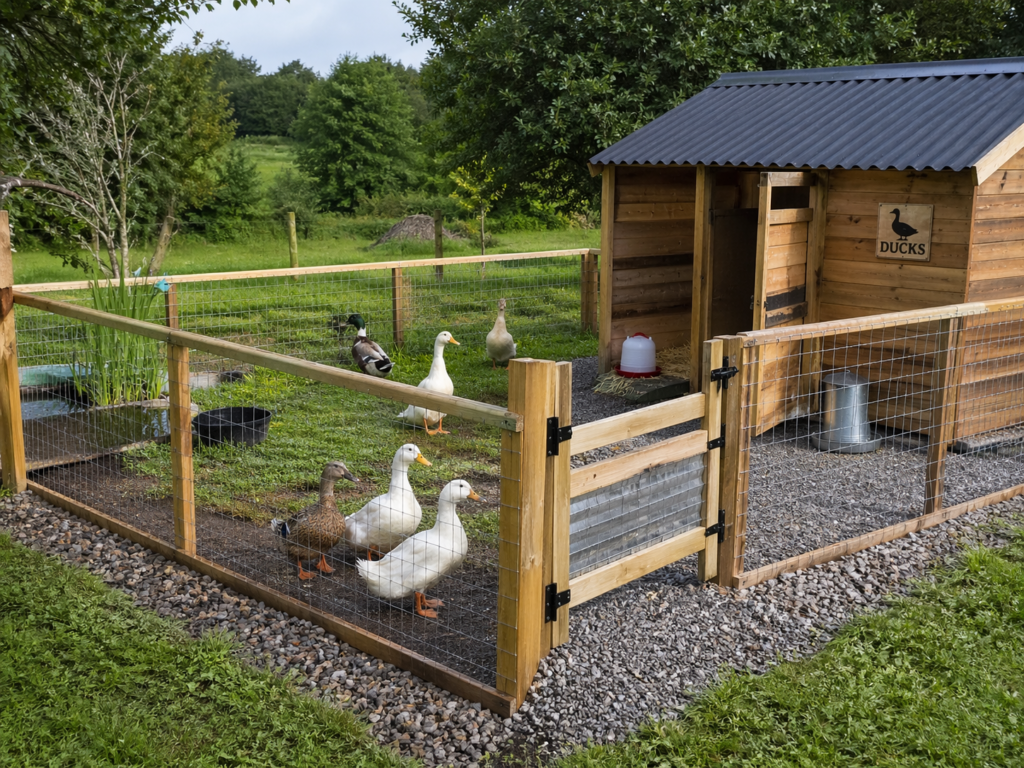
For small backyard flocks, a low duck house, shed, or converted outbuilding can work well. For larger groups, a purpose-built duck pen with a secure sleeping house and fenced outdoor run is usually the better option.
How much space do ducks need?
One of the biggest mistakes in housing for ducks is giving them too little room. Overcrowding leads to dirtier bedding, more stress, and more frequent squabbling around food, water, and nesting areas.
Inside the shelter, ducks need enough floor space to lie down comfortably, turn around easily, and avoid being forced into damp or dirty corners. Outdoors, they need enough room to move, forage, preen, and behave naturally.
The exact amount of space depends on breed size, weather, and how much time they spend indoors, but in general, more space is always better. Heavy breeds need more room than light breeds, and ducks kept in wet seasons especially benefit from larger outdoor areas so the ground does not become one permanent mud patch.
The most important feature: a dry floor
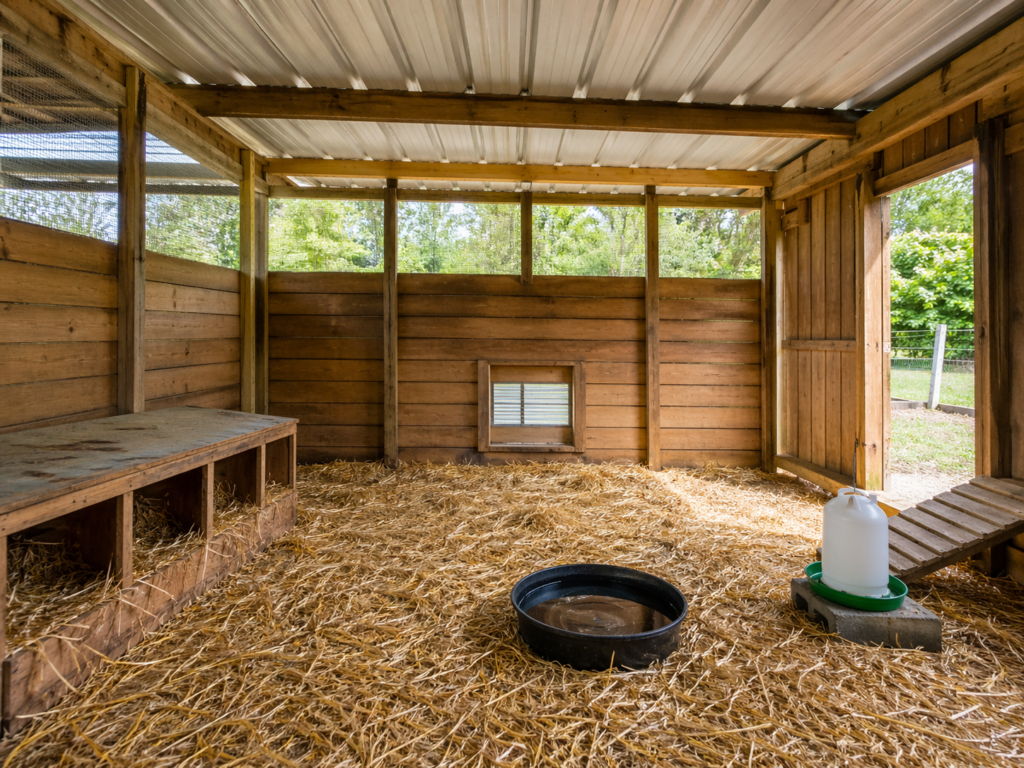
Many new keepers focus on walls and fencing first, but the real success of a duck house often comes down to flooring and drainage. Ducks bring in moisture on their feet and bodies, and they also create a lot of mess around water. If the floor stays wet, the whole housing system becomes harder to manage.
A slightly raised shelter position often works better than placing the house in a low, damp part of the garden. Good drainage around the house is just as important as the shelter itself. A duck house placed on soggy ground will stay harder to clean and less comfortable for the flock.
Inside, bedding should sit on a floor that can be cleaned thoroughly and that does not trap moisture. Many keepers prefer practical, easy-to-clean surfaces covered with generous dry bedding. Whatever material you choose, the goal is the same: keep ducks off cold, wet ground and make routine cleaning simple.
Best bedding for duck housing
Bedding plays a major role in any duck housing setup. Ducks need soft, absorbent bedding that helps manage moisture and gives them a comfortable place to sleep. Bedding also affects cleanliness, smell, egg quality, and overall flock hygiene.
Clean straw is a common choice because it gives good insulation and a comfortable sleeping surface. Other absorbent bedding types may also be used if they stay dry and are suitable for poultry. The most important rule is not the exact material but the condition of it. Bedding must be replaced or topped up often enough to stop it becoming damp, compacted, or heavily soiled.
If the bedding smells strongly, feels wet, or sticks to eggs and feathers, it is no longer doing its job. In duck keeping, fresh bedding is not a cosmetic detail. It is part of basic health care.
Ventilation without drafts
Ducks produce moisture overnight, especially when several birds are housed together. Without good airflow, condensation builds up fast inside the shelter. This creates a damp environment that can affect comfort and hygiene.
That is why proper duck house ventilation matters so much. Fresh air needs to move through the shelter, but ducks should not be exposed to strong direct drafts at floor level. A well-ventilated house feels fresh rather than stuffy, and the bedding stays in better condition for longer.
This balance is important in every season. In cold weather, some beginners try to seal the house too tightly, thinking it will keep ducks warmer. In reality, trapped moisture often causes more problems than cool air. Ducks cope with cold better than they cope with damp, stale housing.
Predator-proof duck housing
A secure duck enclosure is essential, especially at night. Ducks are vulnerable to predators because they do not fly as strongly as many other birds and they do not defend themselves particularly well in a confined area. A solid shelter with reliable locks and strong fencing can make the difference between a safe flock and a disaster.
Night housing should be fully enclosed and closed securely every evening. Weak doors, gaps in walls, loose wire, and poorly fitted panels all create risk. Outdoor runs should also be planned carefully. The exact predator threats vary by location, but the general principle remains the same: assume that anything weak will eventually be tested.
It is also wise to think about the area around the duck house. Overgrown vegetation, hidden corners, and poorly lit access points can make predator activity harder to spot and easier to miss.
Nesting space in the duck house
If you keep laying ducks, housing should include quiet, sheltered nesting areas. Ducks often prefer simple nest spaces placed in calm, dimmer parts of the house rather than anything too exposed or elaborate.
Soft, dry bedding in nesting areas helps keep eggs cleaner and reduces breakage. Some ducks will choose their own favourite spots regardless of what was planned, so observation matters. A good duck keeper adjusts the setup based on how the flock actually behaves rather than insisting on a perfect-looking layout that the birds ignore.
Outdoor access and shelter
Ducks need more than an indoor house. Good backyard duck housing includes a safe outdoor area where they can walk, forage, preen, and enjoy fresh air. Even when ducks have access to water and open ground, they still benefit from outdoor shelter in the form of shade, windbreaks, and protection from heavy rain.
If the entire outside area turns muddy, ducks can still cope for a while, but management becomes harder and hygiene standards drop. Rotating access areas, improving drainage, and protecting the ground near entrances can all help keep the environment more practical.
The space just outside the duck house often gets worn down first. This is where many flocks create the most mess, so that zone needs extra attention.
Should ducks share housing with chickens?
Some keepers house ducks and chickens together, and in some setups this can work. However, ducks and chickens do have different needs. Ducks are wetter, messier, and less interested in roosting. They also tend to splash water and dampen the environment more quickly.
For that reason, mixed housing needs careful management. If ducks and chickens are kept together, the shelter must still meet the ducks’ need for ground-level comfort, dry bedding, and good ventilation. In many cases, separate sleeping arrangements are easier and cleaner.
Common duck housing mistakes
A lot of duck housing problems come from the same few errors. Shelters are often too small, too dark, too damp, or too difficult to clean. Water is sometimes placed too close to bedding, which quickly creates wet sleeping areas. In other cases, houses are made secure against rain but not secure enough against predators.
Another common mistake is copying chicken coop designs without adapting them for ducks. Ducks do not need perches, high nest boxes, or awkward access ramps. They need simple, practical, ground-level housing that stays clean and dry.
What the best duck housing looks like in practice
The best housing for ducks is not necessarily expensive or decorative. It is practical. It stays dry after rain. It has fresh air without harsh drafts. It offers enough space for the flock size. It is easy to clean. It protects ducks at night. It gives them a calm place to rest and lay.
When housing is done well, everything else becomes easier. Bedding stays more manageable, eggs stay cleaner, ducks stay calmer, and the whole flock is simpler to care for through changing weather and seasons.
Final thoughts on housing for ducks
If you are planning your setup, start with the basics and get them right. Focus on dry flooring, secure structure, good airflow, enough room, and easy daily maintenance. A smart duck housing system does not have to be complicated, but it does need to reflect how ducks actually live.
Good housing supports health, comfort, and long-term flock success. Whether you keep two ducks in a backyard or a larger group on a smallholding, providing safe and well-designed shelter is one of the best investments you can make.
FAQ section
What is the best housing for ducks?
The best housing for ducks is a dry, well-ventilated, predator-proof shelter with enough floor space, clean bedding, and easy access to a secure outdoor area.
Do ducks need a coop at night?
Yes, ducks need a safe enclosed shelter at night to protect them from predators, bad weather, and damp ground conditions.
Can ducks live in a chicken coop?
Ducks can sometimes use a chicken coop, but the setup usually needs adjustment. Ducks need ground-level sleeping space, dry bedding, good airflow, and layouts that do not rely on roosting.
What bedding is best for ducks?
Clean, dry, absorbent bedding is best for ducks. The key is to keep it fresh and replace it before it becomes wet or heavily soiled.
Do ducks need ventilation in their house?
Yes, ventilation is very important. Duck houses need airflow to reduce moisture and keep the environment fresh, but they should not expose ducks to strong drafts at floor level.
How do you keep a duck house dry?
Use a well-drained location, protect the roof and walls from leaks, provide absorbent bedding, avoid water spills inside the sleeping area, and clean regularly.